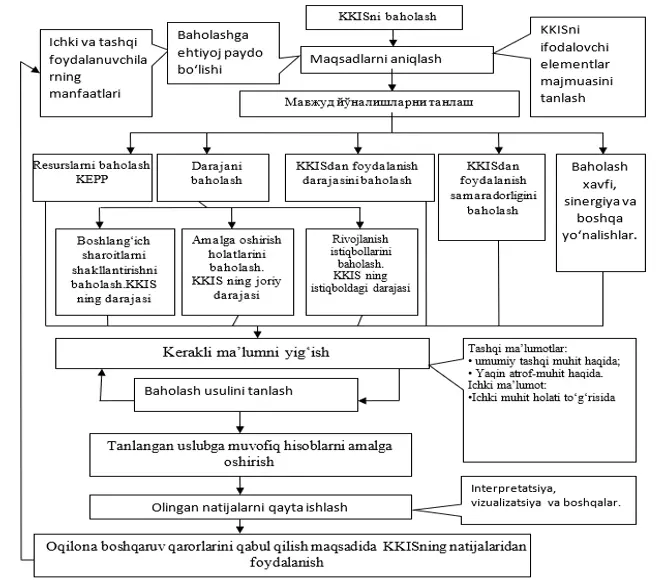
This article covers the issues of assessing the economic potential of industrial enterprises in the region from a theoretical and practical perspective. It is argued that the process of analyzing economic potential serves to determine the capabilities and development directions of industrial enterprises by processing, evaluating and interpreting indicators based on internal and external reports. At the same time, the role of the analytical support system in assessing economic potential, the interrelationship of information and analytical methods in the decision-making process, and their importance in the effective organization of management are shown. The study developed a conceptual model and mechanism for assessing the complex economic potential of industrial enterprises, in which the property object, the system of target indicators (EV, SV, EVA, NP, FCFF, E, A, N) and functional components are identified as the main elements of potential. The need to take into account the interests of external and internal users, their goals and needs in the assessment process is emphasized. The article also analyzes the profitable, cost-effective and comparative approaches to assessing economic potential, their advantages and limitations, and concludes that it is necessary to form a comprehensive assessment of economic potential as a multi-component system.
Maqola muhokamasi